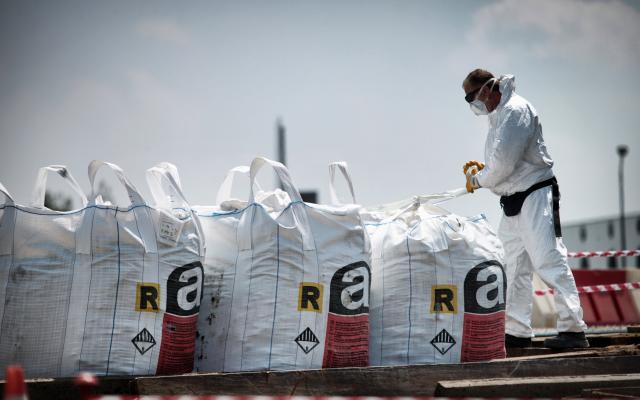
You employ your staff in the construction sector. Then they probably regularly work in dusty conditions. However, inhaling dust can be harmful to health.
It is known that inhaling fine dust containing crystalline silica can cause lung damage, including silicosis.
What is quartz dust?
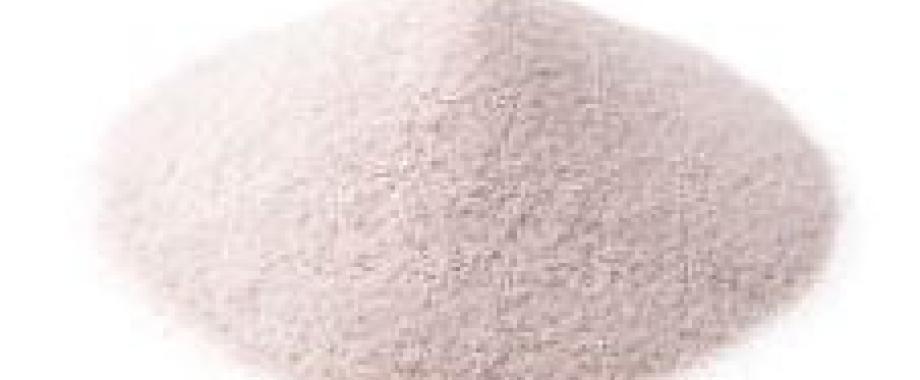
Quartz is the most common form of crystalline silica. It is present in sand and natural rocks. Consequently, also in many building materials such as glass, ceramics, brick, mortar,…
A number of professional groups deal with quartz dust daily, including:
- pavers (of bricks, kerbstones) and asphalt workers
- masons
- roofers
- floor layers
- glass industry
- kitchen builders…
The health risks of silica
By far the main route of exposure to silica is through breathing.
Silicosis or miner's lung, one of the world's oldest known occupational diseases, is the primary health effect caused by respirable crystalline silica.
In addition to silicosis, several other conditions are associated with exposure to respirable crystalline silica: lung cancer, certain autoimmune diseases such as rheumatoid arthritis and chronic bronchitis.
Measures
The employer must ensure that exposure to harmful dust, such as quartz dust, remains below a determined amount. +
It can be assumed that if a lot of dust is seen being released into the air, the limit value is exceeded.
- Elimination, meaning ensuring that silica is no longer worked with.
Example: using plastic instead of concrete kerbstones
- Substitution or replacement means that you look for another working agent with similar functional properties but without or with a less negative safety and health impact.
Example: ordering custom-sized half tiles from the supplier so they don't need to be cut
- Technical measures: Collective protective equipment, source extraction, …
Example: water supply can be used to settle the generated dust
- Organisational measures:
Example: job rotation where employees do not continuously perform the same task, extra attention to clean sanitary facilities and good hygiene when eating and drinking.
- Personal protective equipment: In the case of silica, this translates into respiratory protection that offers sufficient protection. This can be achieved through the use of FFP3 dust masks (disposable), half or full face masks with P3 dust filters, or with a full face mask/hood with overpressure (so-called airstream helmet) with P3 filter.
Inform your employees!
Training is an important measure when working with chemical products.
Provide your employees with information about the health effects of respirable crystalline silica dust.
Give clear instructions on the use of PPE and workwear.
Training on applying the correct techniques is necessary.
Information sessions on workplace maintenance, used equipment, and PPE
Health surveillance
If the risk assessment shows that employees are exposed to the risk of respirable crystalline silica, they will receive an annual medical examination.
During the medical examination, we inform employees about the danger of working with silica. The importance of occupational hygiene measures to reduce dust exposure and thus the risk of adverse health effects is highlighted. The importance of correct use of personal protective equipment is also explained.
Furthermore, symptoms are inquired about and a clinical examination is performed. A lung function test is also conducted annually.
Premed's Risk Management department can always be engaged to carry out risk analyses and/or to provide advice on preventive measures.
Be sure to check out our brochures on the Premed Extranet.