Why is attention to chemical agents so important?
Chemical products are used in almost every sector. From the construction site to the laboratory, and from cleaning to the production line: the risks are diverse. Exposure can occur in various ways: through inhalation of vapours or dust, through skin contact, or by ingestion. The health effects range from mild skin irritation and allergies to serious, chronic conditions such as lung diseases, nerve damage, or cancer. A structured approach is therefore not a luxury, but a legal and moral duty to ensure the safety of your staff.
Benefits of safe management
A well-thought-out policy regarding chemical agents offers many benefits to your company:
-
Better health and less absenteeism: By minimizing exposure, you prevent both acute and chronic health complaints among your employees.
-
Increased workplace safety: Clear procedures and correct use of protective equipment reduce the risk of incidents and work accidents.
-
Legal compliance: You comply with complex legislation on chemical products, such as the CLP and REACH regulations.
-
Improved image and trust: A safe working environment demonstrates that you care about the well-being of your employees, which increases commitment and satisfaction.
Advice for optimal control at the workplace
-
Inventory all products
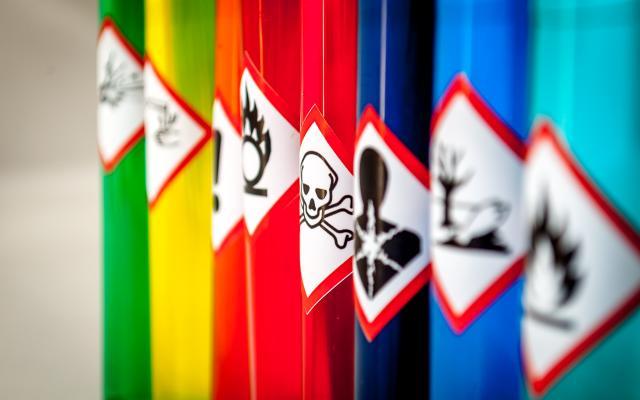
The first step is to know which chemical products are present and used in your company. Make a complete inventory and collect the most recent safety data sheet (SDS) for each product. This document contains crucial information about the hazards, necessary protective measures, and emergency procedures.
2. Perform a risk assessment
Evaluate the real risk for each task. Take into account:
-
The hazardous properties of the product (see SDS).
-
The manner and frequency of exposure (inhalation, skin contact).
-
The quantity of product used.
-
The efficiency of existing measures (e.g. ventilation).
3. Apply the prevention hierarchy
Always follow the occupational hygiene strategy to address risks:
-
Elimination/Substitution: Can the hazardous product be replaced by a safer alternative?
-
Collective protection: Implement technical measures such as source extraction, ventilation systems, or a safety or fume cupboard.
-
Individual protection: If exposure cannot be sufficiently limited, ensure the correct personal protective equipment (PPE), such as gloves, safety glasses, or respiratory protection.
4. Provide clear information and training
Ensure that your employees understand the risks and know how to work safely. Provide clear work instruction cards and regularly organize training sessions on the hazards and the precautions to be taken.
Asbestos at work: risks and prevention
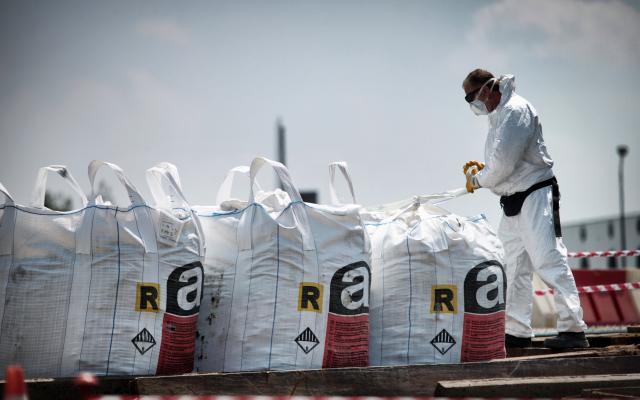
Exposure to asbestos fibers can entail very serious health risks. For many companies, especially in the construction, renovation, and industrial sectors, asbestos remains a current challenge. A good approach and prevention are crucial to protect employees.
What is asbestos?
Asbestos is a mineral that for years was praised for its heat resistance, insulating properties, and durability. It is a collective name for a group of six natural minerals consisting of microscopically small fibers. These fibers are invisible to the naked eye and can, when inhaled, penetrate deep into the lungs.
Asbestos was widely used in buildings, machines, and installations until the 1990s.
Health risks
Asbestos fibers can cause serious diseases, including:
- Asbestosis: a chronic lung disease that develops after prolonged exposure.
- Mesothelioma: a rare but aggressive form of cancer of the pleura or peritoneum.
- Lung cancer: especially in smokers, the risk increases exponentially with asbestos exposure.
These diseases often only develop decades after exposure, which emphasizes the seriousness of the risk.
Where does asbestos still occur?
Asbestos has been banned in Belgium since 2001, but it is still common in older buildings and installations.
Possible risk locations:
- Corrugated sheets and roofing
- Insulation around heating pipes
- Ceiling and wall panels
- Floor tiles
- Brake systems of older machines
The role of the employer
Employers have a legal obligation to guarantee a safe and healthy working environment. If asbestos is (potentially) present in the workplace, the following steps are crucial:
- Asbestos inventory
Have an expert draw up a complete inventory of materials that may contain asbestos. - Risk assessment
Assess the nature and extent of the risk when working near asbestos-containing material. - Information and training
Employees must be informed and trained about the risks of asbestos and how to work safely. - Preventive measures
- Avoid any unnecessary exposure
- Use appropriate personal protective equipment (PPE)
- Ensure shielding of the work environment
- Engage recognized asbestos removers for demolition or renovation work
What can Premed do?
As a partner in workplace prevention, we support organisations in:
- Drawing up or updating the asbestos inventory
- Performing risk analyses
- Organizing customised training courses
- Advising on safe working methods and protective measures
Conclusion
Asbestos at work is a persistent risk, especially in older buildings. A proactive approach, based on knowledge, prevention, and collaboration with experts, is the key to a safe working environment. Protect the health of your employees today to prevent health problems tomorrow.
Support by Premed
The management of chemical agents is a complex matter. Premed assists you with a multidisciplinary team of experts.
-
Inventory and risk assessment: We help you with compiling a chemical inventory and performing a thorough risk assessment.
-
Exposure measurements: Our prevention advisers carry out workplace measurements to determine the concentration of harmful substances in the air.
-
Tailored advice: We advise you on the preventive measures to be taken, the choice of PPE and the layout of your workplace.
-
Training courses: We offer training courses for managers and employees on the safe handling of chemical products.
Do you want to better manage the risks of chemical products in your company?
Contact us for more information or a customised quote!