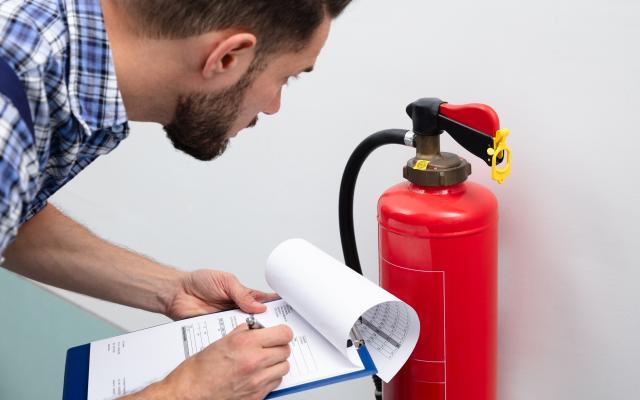
Start with risk assessment

Limiting the fire risk at the workplace starts with a thorough risk assessment. This provides an overview of the circumstances that can cause fire and maps out the possible consequences.

The goal is to identify, analyse, and assess potential fire hazards, so that appropriate measures can be taken to prevent fires and limit damage in the event of a fire.

The analysis addresses, among other things, these questions:

  • How large is the company?
  • What activities take place there?
  • How many employees are present daily?
  • How likely is the occurrence of fire?
  • …

The answers to these questions determine which specific preventative measures are needed. The general safety measures are also essential. For example, emergency exits and extinguishing agents must be clearly present and indicated. A smoking ban and general orderliness and tidiness help avoid risky situations.

Furthermore, ensure that every employee is aware of the emergency procedure and regularly organize fire drills to check that everything runs smoothly.

extinguisher

Establish a fire fighting service

Every company should have an in-house fire fighting service. Ideally, it comprises several employees who work across the organisation. This way, there is always an employee nearby who can take on a coordinating role in the event of a fire.

Important tasks of the fire fighting service:

  1. Preventing fires by identifying risk situations.
  2. Facilitating evacuation by warning of fire, guiding employees to a safe place, and assisting public emergency services.
  3. Extinguishing or controlling an incipient fire.

They also contribute to risk assessment and establish internal procedures. 

Provide training

A targeted training optimally prepares the members of the fire fighting service for their tasks; the training includes both a theoretical and practical component. 

Ensure that everyone within the organisation also knows who the members are, so they can immediately turn to them during an exercise or emergency. 

With training on the use of extinguishing agents, you also update the knowledge of your own employees, and it's a fun team event! 

Is an evacuation drill mandatory in a company?

Yes, an evacuation drill is mandatory in companies in Belgium. Companies are expected to organize periodic evacuation drills to ensure that employees know what to do in case of an emergency, such as a fire or other hazards.

At least once a year an exercise must take place, but this can also happen multiple times, depending on the specific risks in the company. 

The evacuation drill must:

  1. Test the practical execution of the evacuation.
  2. Make employees aware of the specific safety procedures.
  3. Test the role of the intervention members.

The employer is obliged to ensure that everyone, including temporary employees or visitors, is sufficiently informed and prepared for emergencies.

Evacuation plans

It is mandatory to hang an evacuation plan in every building (offices, warehouse, shops, hospitality, crèche, hotels, …):

  • 1 plan per floor

  • At the entrance of the building

  • In larger spaces with multiple escape routes, it may be necessary to hang multiple plans

On these evacuation plans or next to these plans, there should be guidelines explaining what needs to be done in case of an emergency or fire. These guidelines must be clear, practical, and understandable for all employees. 

Compile a fire prevention file

Your organisation's fire prevention file bundles all measures into a clear overview:

  1. Results of risk assessment
  2. Organisation of fire-fighting service
  3. Internal emergency plan with procedures
  4. Evacuation plan
  5. Intervention plan
  6. Findings from evacuation drills
  7. Fire protection equipment
  8. Inspections, checks and maintenance
  9. Deviations
  10. Advice
  11. Information to emergency services

Through the fire prevention file, the prevention adviser and public emergency services, among others, get a clear, overall picture of the prevention policy in the company.

But you must also continuously update the file based on new inspections, regular evacuation drills, and identified fire risks or situations that hinder a quick and safe evacuation and intervention. Therefore, state in the overall prevention plan the measures you plan to take in the future and the evidence that demonstrates why your prevention policy is sufficient to limit the fire risk in the workplace.

Only by remaining continuously alert to possible improvements can you optimally increase the fire safety of your organisation.

Frequently asked questions

A fire prevention file contains the result of the risk assessment, organisation of the fire-fighting service, intervention plans, results of evacuation drills, fire protection measures, inspections and deviations.

Related news

battery
20 March 2025

10 Tips to prevent battery fires

Various incidents in the media show that batteries are not as innocent as they seem. It's not just the rechargeable batteries of electric bikes or cars, but also those of small devices such as power b...
Read more

Support via Premed

Need a risk analysis or specific advice on fire prevention at work?
Contact us
I am already a customer

Wondering what makes Premed that little bit different as an External Service for Prevention and Protection at Work (ESPPW)? Discover the many benefits of becoming a Premed customer now!

* Required field