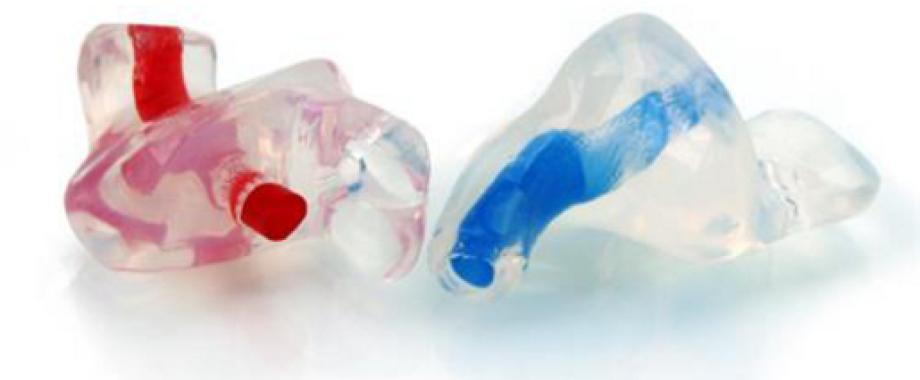
Please pay attention to custom earplugs, so-called “otoplastics”
Legislation – just like us – never stands still. Below is an overview of what has changed in recent years and what exists:
- The “old” European Directive 89/686/EEC was replaced by European Regulation 2016/425/EU
- concerns the placing on the market of PPE and is therefore important for manufacturers, not so much for users. Came into force on 21 April 2018, 21 April 2019 concerns the transitional provision for products that were already on the market under the old directive. European Directive 89/656/EEC, amended by European Directive 2019/1832
- adopted in book IX title 2 PPE in the codex, concerning use etc.
- Directive (2003/10/EC) à adopted in book V title II noise, concerning the control of the risk “noise”
- The European standard series 352 on hearing protection, more specifically EN 352-2:2020 on custom-made earplugs; “otoplastics”.
This last one, in particular, is causing some commotion. This standard imposes the obligation to perform a so-called “leak test” or “fit test” for every custom earplug provided.
But, is such a standard legally mandatory? Although EN 352-2:2020 does not explicitly appear in Belgian regulations, it is a requirement for this PPE to be placed on the market in the European Union. This standard will therefore be mentioned in the CE conformity certificate. The instruction for a leak test will also be mentioned as a necessary condition for correct use in the earplug manual and possibly additionally emphasized upon delivery or initial measurement of the ear canal. Both the declaration of conformity (CE) and the manual are documents that must be present upon commissioning; checking this is an obligation of the employer (art. IV.2-8 of the codex).
Are there any other changes regarding PPE legislation that I should be aware of?
With the amendment of the European directive (2003/10/EC), a number of other nuances have also found their way into our codex (title 2 PPE of book IX).
For example, the employer's obligation to monitor all phases of PPE is now explicitly pointed out, meaning in addition to selection (risk assessment), purchase/commissioning, also the correct use, maintenance, cleaning, disinfection, and repair of the PPE. How the employer must do this exactly is freely chosen, but must be traceable in the context of the dynamic risk management system (DRMS).
In addition, in our regulations (annex IX.2-2), it is now determined per risk which PPE must be used, and not which PPE must be used for which risk. The logic is therefore reversed, but has become more logical.
For all your questions, please contact info@premed.be or 016 308 111.