Maintenance of CO2 meters
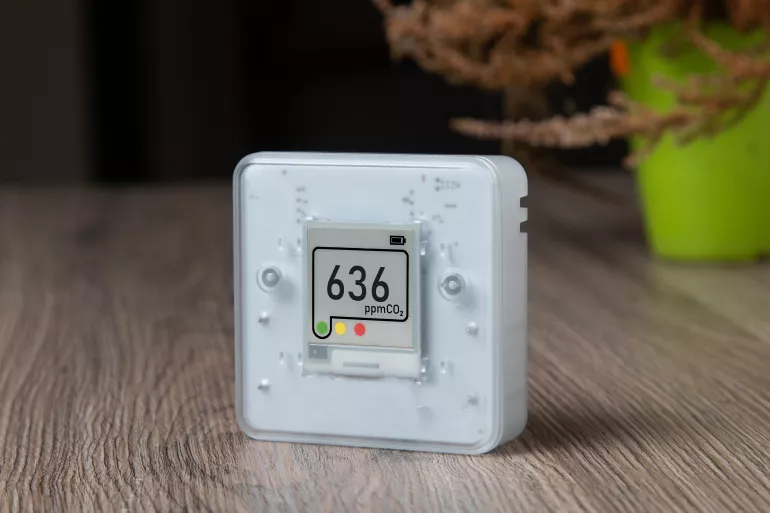
Also, don't forget that these CO2 meters need to be maintained. To ensure that the CO2 meter continues to provide accurate data, regular maintenance is of great importance. Here are some tips:
- Calibration: CO2 meters must be calibrated periodically. This ensures that measurements remain accurate. Depending on the model and manufacturer, it is recommended to calibrate the meter once a year or every two years. Be sure to check the operating instructions.
- Cleaning: Ensure that the ventilation openings of the meter are free of dust and dirt. This can affect measurements and shorten the lifespan of the meter. A simple cleaning with a soft cloth may be sufficient.
- Check batteries: For portable meters, it is essential to check the batteries regularly. Low battery voltage can affect the operation of the device. So make sure you always have spare batteries at hand or charge the meter regularly.
Air purification systems
As mentioned earlier, it is advisable to purchase air purification systems only when mechanical ventilation or traditional ventilation are not possible. To help you with your choice, you can use the Practical guide for choosing an air purification system | Federal Public Service Health. In this guide, the Federal Public Service Health refers to a database of recognized air purification systems.
Currently, this database contains only one manufacturer, which is not an accurate reflection of reality. There are indeed multiple devices on the market that meet the government's criteria. However, devices are only included in the list when manufacturers themselves submit an application for recognition; therefore, over time, the list will be supplemented with other devices and manufacturers.
Last but not least
Since November 6, 2022, the "indoor air quality law" exists in Belgium, which has been drawn up to improve air quality in publicly accessible enclosed spaces (e.g., cafes, restaurants, sports halls, theaters, etc., these are not yet precisely defined in the legislation). Homes and office meeting rooms do not fall under this law.
The law has four main objectives, which will only become enforceable after the publication of royal decrees (RD):
-
Two non-binding reference levels for indoor air quality.
-
Measuring the CO2 concentration, carrying out a risk assessment and action plan. The RD of May 12, 2024, provides practical guidelines for this, such as criteria for CO2 meters and information for the public.
-
Introduction of a certification and labeling system, rollout and obligation planned for 2038.
-
Creation of an indoor air quality platform.
From 1/10/2024, the following provisions can be applied on a voluntary basis. Only from 2027 will these become mandatory.
-
use at least 1 CO2 meter per room;
-
perform a risk assessment and, if necessary, draw up an action plan; and
-
at the request of the public, provide information on the current or expected air quality in the location.
-
Codex on well-being at work (and the standards included therein on air quality by means of CO2 concentration thresholds and ventilation rates), applicable to everyone who employs workers.
-
Legislation on product standards (air purification systems and CO2 meters), applicable when placing these products on the market.
The exact places/sectors where this obligation will apply will only be defined later in a Royal Decree (not yet published). This will happen in phases, but eventually, all enclosed places accessible to the public will fall under these obligations (target date: 2037).
Other legal provisions that are already applicable:
-
Codex on well-being at work (and the standards included therein on air quality by means of CO2 concentration thresholds and ventilation rates), applicable to everyone who employs workers.
-
Legislation on product standards (air purification systems and CO2 meters), applicable when placing these products on the market.