In Flanders, 3 people die by suicide every day. The number of suicide attempts is 10 times higher, which means that approximately 30 people in Flanders attempt suicide daily. Suicide never has a single cause. A complex interplay of biological, psychological, social, and psychiatric factors forms the basis.
Not preventable?
The idea that suicide is not preventable is a common misconception. When someone thinks about suicide, something can definitely still be done. Unfortunately, this does not mean that we can stop all suicides or that suicide prevention is an easy task, quite the contrary. But there are many ways to help, and the goal is to reach as many people as possible who are struggling and see no way out. We want to make it clear to them that talking helps and that they are not alone.
4 before 12
Although 1 in 4 indicates not feeling well, talking about psychological vulnerability remains a taboo in Flanders. Therefore, it is all the more important that we are alert to the signs that indicate someone may not be doing well.
It is not too late yet, but it is 4 before 12.
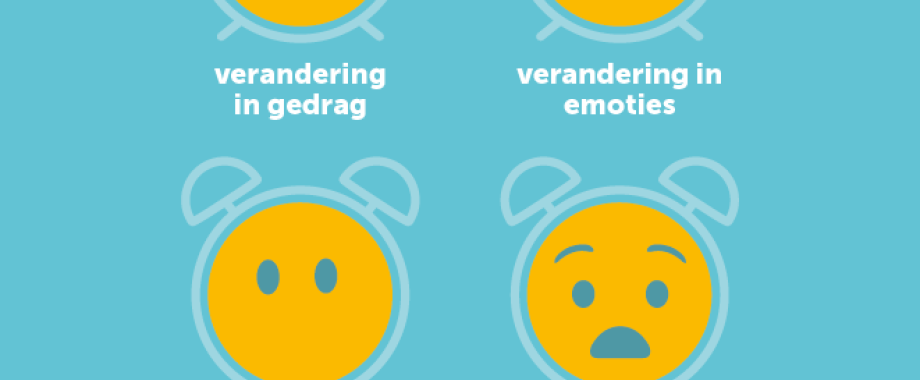
What are the 4 signs?
The following signs may indicate that someone is struggling, especially when you notice multiple signs and these occur over a longer period.
1. Change in behaviour
Psychological problems often bring about changes in behaviour. Be alert if this behaviour is new or clearly increases in frequency.
2. Change in emotions
If someone is not doing well, you usually notice it in their emotions. They are more often irritated or angry, show less energy, cry more easily, etc.
3. Withdrawing
People who are psychologically struggling isolate themselves more from the outside world and are more withdrawn.
4. Saying things are not going well
From what people say, you can infer that they are having a hard time. Sometimes this is clear, sometimes evasive and vague. Be alert to the message people convey to you.
Have you noticed any signs?
Are you concerned about someone in your environment who may be struggling? Do the signs indicate that he or she needs help? Don't be afraid to start the conversation. By responding to warning signs, you take the person out of their isolation and can broaden their tunnel vision. Often, it is a relief for them to be able to talk about it. And don't forget: it is better to overreact than to underreact when you suspect someone is at risk of suicide!
Discover what you can do and how you can help on the 4 before 12 website.
You will find some tips that can help you in engaging in such a conversation, and you will also find useful addresses where you can find professional help:
Anyone who personally has questions about suicide can contact the Suicide Line at the free number 1813 or at https://www.zelfmoord1813.be/
As an organisation, do you have questions about preventing suicide among employees? Do not hesitate to contact the prevention advisers for psychosocial aspects at Premed vzw.
This can be done via the following email address:
or at
016 30 81 11