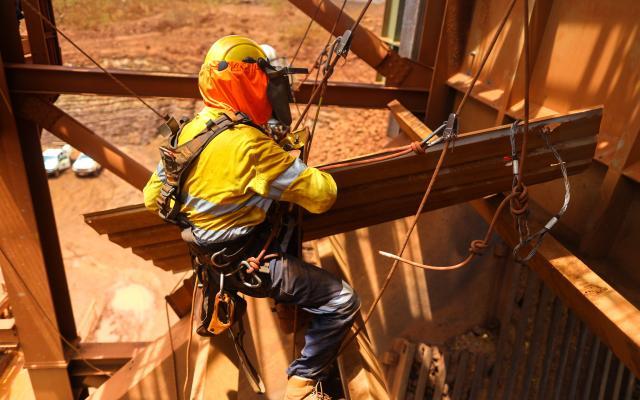
Collective & personal protective equipment
The Codex on Well-being at Work also regulates the use of collective protective equipment (CPE), which is intended to protect multiple employees simultaneously against risks. The main provisions are:
- Preference over personal protection – The legislation follows the prevention hierarchy: technical or collective measures must, if possible, replace or supplement personal protective equipment, because CPE are more effective in preventing exposure to risks.
- Provision and maintenance – The employer must provide collective protective equipment that is suitable, compliant with legal standards and well-maintained, such as guards, ventilation systems, guardrails, emergency stops and safety nets.
- Instructions and use – Employees must be informed and trained on the correct use of collective protective equipment, and the employer must monitor their correct application.
- Risk assessment and evaluation – The employer must carry out a risk assessment beforehand to determine which CPE are needed and regularly check whether they continue to work effectively and are adapted to the work activities.
Use of personal protective equipment (PPE). The main provisions are:
- Provision – The employer must provide free, suitable and well-maintained PPE for all employees who are exposed to risks that cannot be fully prevented by technical or organisational measures. PPE must be adapted to the task, the user and the specific risks.
- Instructions and training – Employees must receive clear instructions and training on the correct use, maintenance, storage and replacement of PPE.
- Mandatory use – Employees are obliged to use the PPE as prescribed by the employer and in accordance with the instructions.
- Control and follow-up – The employer must regularly check whether PPE are used and maintained correctly, and evaluate risks to ensure that the protection remains adequate.