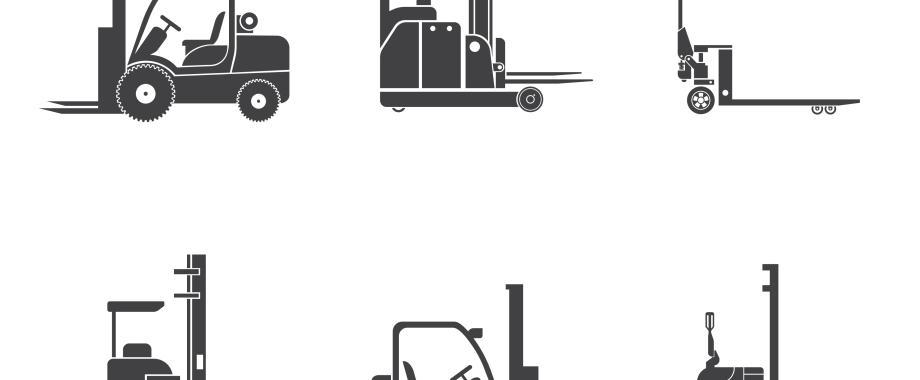
This is determined in various places in the legislation.
- Law of 4 August 1996 concerning the well-being of workers in the performance of their work and its implementing decrees
- Codex X.3 – Young people at work
- Law of 3 July 1978 concerning employment contracts.
Codex X.3 – Young people at work
Who is a young person?
- any person from 15 to 18 years old, who is no longer subject to full-time compulsory education and who is employed under an employment contract or who, other than under an employment contract, performs work under the authority of another person;
- any person who is no longer subject to full-time compulsory education and who is employed under an apprenticeship agreement;
- any person who is no longer subject to full-time compulsory education and who performs work under an agreement concluded in the context of a training pathway;
- a pupil or student following a course of study whose training program provides for a form of work performed in the educational institution;
- a student-worker who is employed under an employment contract for the employment of students as referred to in Title VII of the Law of 3 July 1978 concerning employment contracts;
Who is a student-worker or student jobber?
Student-worker (student jobber) are: all students who, in accordance with Title VII of the Law of 3 July 1978 concerning employment contracts, have concluded an employment contract with the employer for employment as a student, with the exception of the categories of students who are excluded by virtue of Article 122 of the same law, but including students who work for at least six months, provided they do not do so for an uninterrupted period of six months with the same employer.
Which workstations are permitted or prohibited?
The well-being legislation contains a non-exhaustive list of jobs that are prohibited for student jobbers. This list serves as a guideline for deciding which workstations are allowed or not for student jobbers. After performing a risk assessment of the workstation, the employer decides whether it is justified to deploy a young worker at the workplace.
The age (younger or older than 18 years) also plays a role in determining whether a job may or may not be performed.
General rules
It is forbidden to let young people perform work that can be considered dangerous:
- which the young person cannot handle physically or mentally;
- with exposure to certain dangerous substances;
- with exposure to ionizing radiation;
- with risk factors that the young person cannot comprehend or prevent due to their lack of
Only examples:
- operating excavators and machines
- erecting and dismantling scaffolding
- use of powder-actuated tools
- work with dangerous machines: woodworking machines, metal presses, drop hammers, etc.
Deviations
The prohibited work mentioned above does not apply to student-workers who are 18 years or older, under the following conditions:
- they are not involved in operating motorized transport equipment;
- their field of study corresponds to the activities for which the prohibition applies;
- the employer requests the advice of the Committee and the competent prevention adviser before employing the student-workers.
What is motorized transport equipment?
All wheeled vehicles, with the exception of rail vehicles, that are intended for transporting, pulling, pushing, lifting or stacking, and placing of scaffolding and loads of any kind, and that are operated by a driver who either walks alongside a transport vehicle or rides on a driver's seat attached to the chassis.
Based on the prohibited list & the deviations, it must be concluded that student jobbers may never work with motorized transport equipment.
Nevertheless, the legislator provides some specific exceptions.
1. permitted from 18 years: platform truck with ride-on driver
- with “limited lift height”;
- max. 16 km/hour;
- upon release, the control element returns to neutral position and the brake engages.
2. permitted from 16 years: platform truck with walk-behind driver (electric pallet truck)
- with “limited lift height”;
- max. 6 km/hour;
- upon release, the control element returns to neutral position and the brake engages.
Note: the term “with limited lift height” refers to lifting the load to a height just sufficient to freely transport this load (non-stacking motorized transport equipment).
Sources;