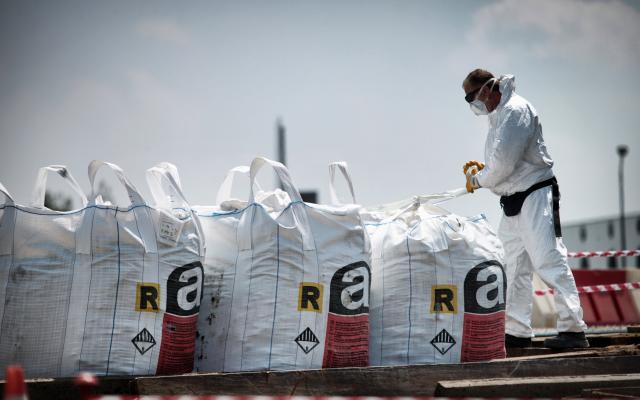
The Belgian Official Gazette of 21 January 2020 published the royal decree of 12 January 2020 amending title 1 concerning chemical agents of book VI of the code on well-being at work, regarding the list of limit values for exposure to chemical agents and of title 2 concerning carcinogenic, mutagenic and reprotoxic agents of book VI of the code on well-being at work.
This royal decree adds the ”activities involving exposure to respirable dust of crystalline silicon dioxide” generated by a work process to annex VI.2-2 “List of processes during which a substance or mixture is released” of the code on well-being at work, thereby unambiguously defining this type of substance as carcinogenic.
What is crystalline silicon dioxide?
Silica or silicon dioxide consists of silicon and oxygen. It occurs in three forms: crystalline, microcrystalline and amorphous (non-crystalline).
Crystalline silica occurs in rocks, stones, sand and clay (see overview on the right). The most common form is quartz. The best known form is sand.
What is silicosis?
Dust lung (silicosis, grinder's disease, asbestosis, chronic pulmonary fibrosis) is a collective name for a number of lung diseases caused by inhaling 'crystalline silica dust' (fine sand, quartz or slate). This mineral occurs in its pure form in quartz, cristobalite and tridymite. It is also found in materials that contain a mixture of different minerals, e.g. building material, cooking pots or glassware.
In the lungs, these substances cause an inflammatory reaction, resulting in scarring in the lung tissue (pulmonary fibrosis). As a result, the available amount of lung tissue decreases over time, leading to less oxygen exchange.
There is a (rare) acute form of dust lung, which develops within weeks to months after exposure, and a chronic form, which only causes problems after 10 to 20 years of exposure.
Health effects of quartz;
- Irritation of the airways: inhaling quartz dust can cause shortness of breath, leading to irritations of the airways.
- Lung diseases: by inhaling quartz dust, one can contract dust lung or silicosis, an incurable disease that makes lung tissue less elastic. During exertion, shortness of breath and tightness then occur. Other symptoms include coughing and chest pain. This damage is irreversible.
- Cancer: quartz dust is carcinogenic. In addition, exposure to quartz dust makes the lung tissue less elastic. As a result, other harmful substances that can also cause cancer (e.g. the tar in tobacco smoke) are less easily removed from the lungs.
Hazardous occupations.
- Stone workers
- Concrete repairers
- Brick/roof tile production
- Ceramics
- Construction and demolition
- Sandblasters
- Quarries
- Foundries
Preventive measures.
- Organisational measures; avoid the release and spread of quartz dust.
- Collective measures; use tools with well-fitting extraction on the work surface and/or with water supply, ensure sufficient ventilation and keep the workplace clean.
-
Dust must be removed by means of a so-called construction vacuum cleaner; i.e. a vacuum cleaner equipped with a textile bag and HEPA filter.
-
Personal protective equipment;
- a dust mask with an FFP3 filter
- pay extra attention to (food) hygiene
- dirty work clothing should not be taken home
- Training
- Adapted health surveillance
Forbidden activities; dry grinding, dry milling, dry sawing, but also dry sweeping construction dust with a brush.
Sources.
- www.gezondheidenwetenschap.be
- constructiv
Support by Premed.
Premed can help you with
- performing a risk assessment
- drawing up measures
- advice on personal protective equipment
- training your employees
- toolbox meetings
- …